
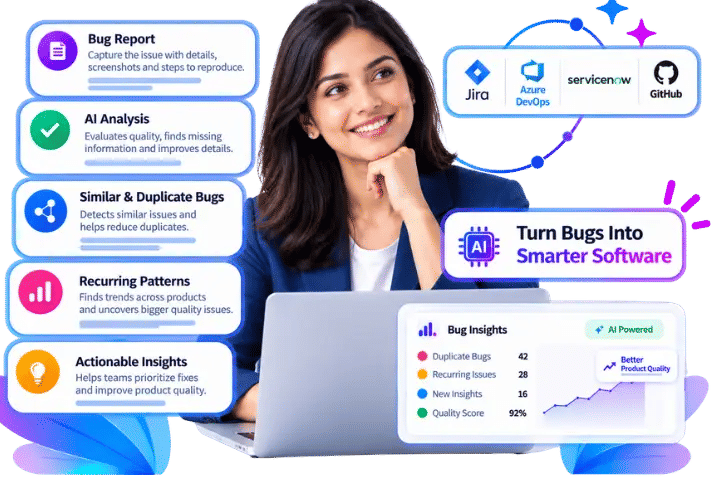



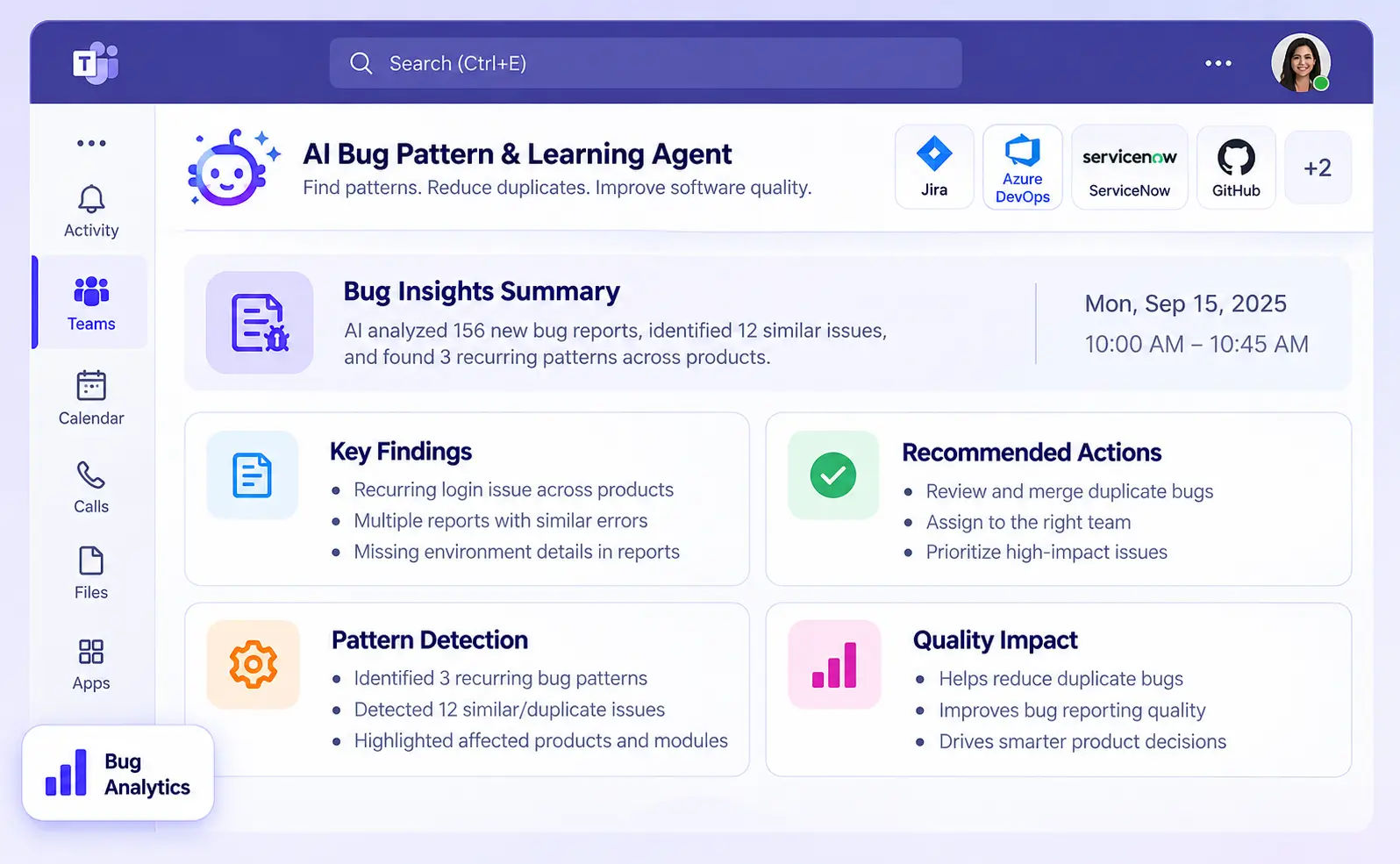





Better bug reports lead to better software. The Bug Pattern & Learning Agent uses AI to review bug reports, improve issue descriptions, find related problems, and reveal repeated defects across products. It helps QA, development, and product teams get better insights from every reported issue and make more informed decisions.
AI-driven bug report quality assessment
Intelligent bug description enhancement
Similar issue and duplicate identification
Cross-product bug trend analysis
Review and assess bug report completeness
Rewrite unclear bug descriptions with AI
Highlight missing or incomplete information
Analyze screenshots and related issue details
Find related bugs and potential duplicates
Track repeated issues across different products
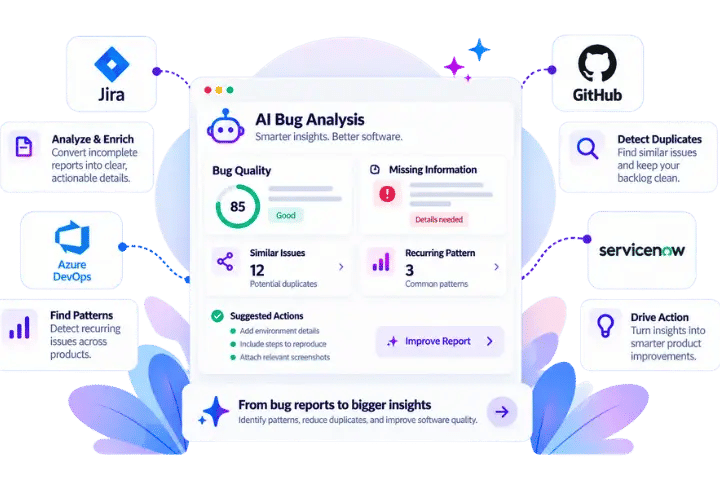
Understand how complete and useful each bug report is before it reaches the development team. AI reviews the submitted information and provides a quality score, helping QA teams identify reports that need more details.
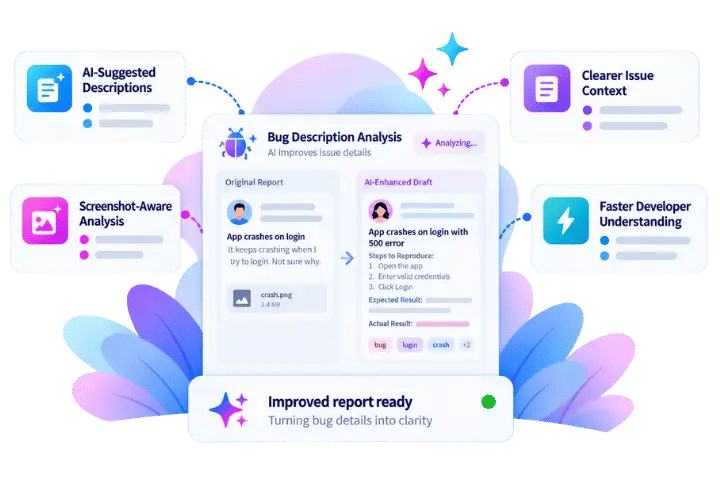
Convert short, unclear bug notes into well-structured descriptions. AI uses the available issue details to recommend better wording, making it easier for developers to understand the problem and investigate it.
Find important information that may be missing from a bug report. The agent highlights gaps and unclear details so testers can improve reports before handing them over to developers.
Get more value from screenshots attached to bug reports. AI examines available visual evidence along with the issue details to help explain the problem and create a clearer report.
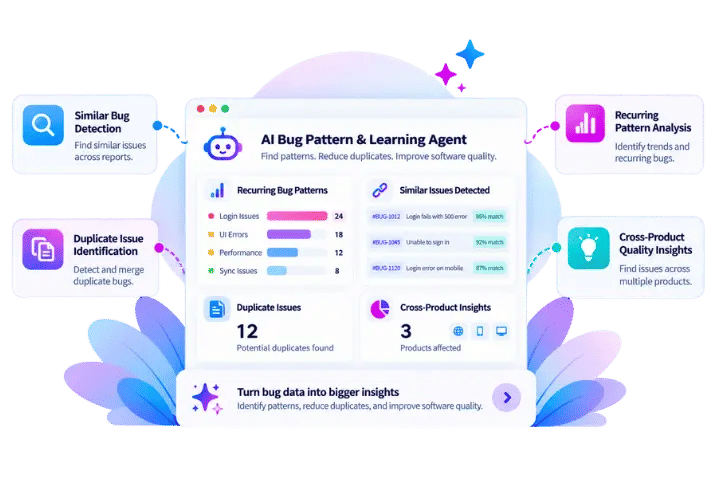
Find bug reports that share similar descriptions, symptoms, or issue details. Help teams recognize possible duplicates, avoid repeated investigations, and maintain a more organized bug backlog.
Look beyond individual bug reports to understand repeated issues across multiple products and applications. Discover common problem areas and give engineering and product teams better insights into software quality.
Basic bug tracking helps teams record and manage individual defects. The Bug Pattern & Learning Agent adds another layer of intelligence by reviewing report quality, connecting related issues, and revealing repeated problems across products.
Start by creating a bug report with the available information and supporting evidence.
Bug title and description
Reproduction steps and comments
Screenshots and visual evidence
Product and application information
The agent examines the submitted bug details to understand how complete and useful the report is for the development team.
Automated bug quality score
Missing information identification
Report completeness assessment
Developer-readiness evaluation
Get AI-powered recommendations to improve the report and provide developers with a better understanding of the issue.
Improved bug descriptions
Screenshot-based context analysis
Clearer issue explanations
Better developer handoffs
Use AI to examine bug records and uncover related issues, possible duplicates, and repeated problems across products.
Similar issue discovery
Potential duplicate detection
Repeated bug identification
Cross-product quality trends
QA teams submit issues with descriptions, reproduction steps, screenshots, and other available information to document the problem.
The AI agent reviews the submitted information, measures report quality, highlights missing details, and recommends clearer descriptions.

Related bug records are analyzed to identify potential duplicates, common defects, repeated issues, and quality trends across products.

QA, engineering, and product teams use these insights to investigate recurring issues, plan improvements, and make better decisions about software quality.

Customer conversations from every channel flow into one connected view, with no change to how your teams talk to customers today.

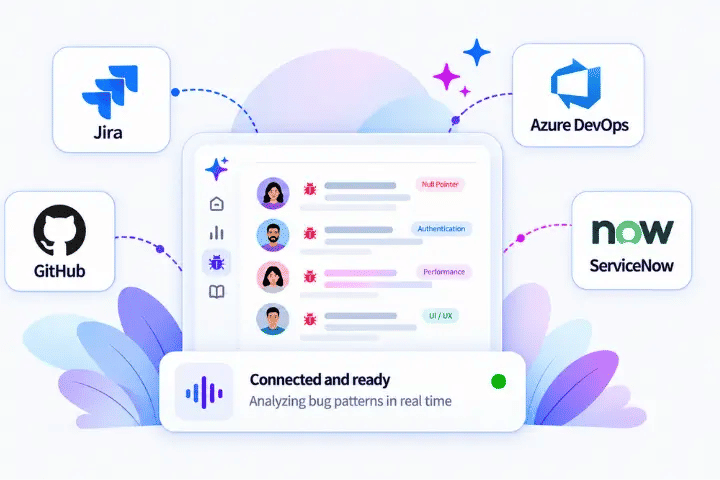
Bring AI-powered bug analysis into your existing bug management environment wherever integration is supported.

Help QA testers, developers, engineering teams, and product managers work with clearer issue details and shared insights.

Support the protection of sensitive bug reports, application details, and development information with enterprise-ready security controls.

Keep bug records and AI-generated insights organized in line with your organization's quality management and governance practices.
Manage access to bug reports, analysis results, and product quality information based on team roles and organizational permissions.
Improve bug documentation and identify missing details before submitting reports to developers.

Receive better-documented issues with clearer descriptions and useful supporting context.
Know each client's concerns, needs, and expectations before your next important meeting.

Understand repeated product issues and discover trends that may need attention.

Analyze bug history to find common defects and identify areas for technical improvement.
Build more consistent bug reporting practices and improve report quality across testing teams.
See every interaction, open issue and activity on one timeline before you walk into a call.

Help developers receive the details they need to understand reported issues. Reduce unnecessary clarification requests caused by incomplete documentation.

Recognize similar and potentially duplicate issues more easily. Help teams reduce repeated investigations and maintain better visibility into reported defects.
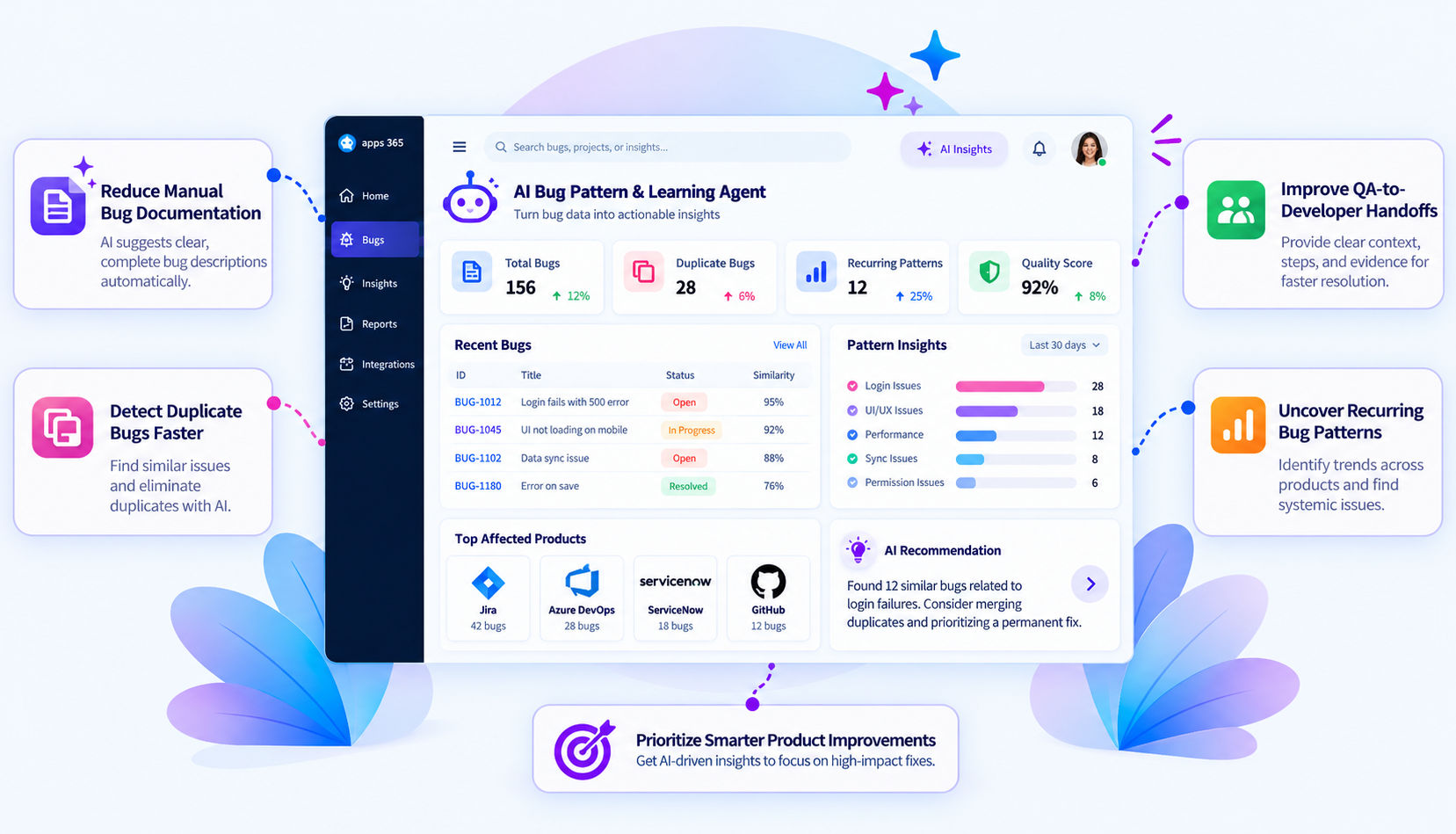
Identify bugs that appear across applications and products. Use recurring patterns to understand common quality challenges and areas that need attention.

Turn individual bug records into broader quality insights. Help product and engineering teams identify recurring problem areas and plan the right improvements.

A Bug Pattern & Learning Agent is an AI-powered solution that reviews bug reports, evaluates their quality, suggests better descriptions, identifies similar issues, and discovers recurring defects across products. It helps teams gain more value from their bug data.
The agent examines the available information in a bug report and generates a quality score. This helps QA teams understand whether the report contains enough useful details for developers to investigate the issue.
Yes. The agent reviews the information already provided and recommends a clearer, more structured bug description. It can also highlight missing details that may need attention.
Yes. The agent can use screenshots as additional context when reviewing a reported issue. It combines available visual information with bug details to help generate a more complete description.
The agent examines bug descriptions and available issue information to identify reports that may be related or describe the same problem. This helps teams recognize potential duplicates and avoid unnecessary investigation.
It helps developers receive clearer, more complete bug reports. With better issue descriptions and supporting context, developers can spend less time asking for missing information and more time investigating defects.
The agent helps product teams understand issues beyond individual bug tickets. By identifying repeated defects and cross-product trends, it provides useful insights for product improvement planning.
No. The agent supports QA professionals by improving bug documentation and identifying possible issue patterns. Testers continue to validate defects, review AI suggestions, and manage the testing process.
Yes. The agent is designed to identify related and recurring issues across multiple products and applications. This gives teams a broader view of software quality and helps them recognize patterns that may not be visible when reviewing individual bug reports.
See how our solution can help your team
save time and cut costs.


By proceeding, you accept Cubic Logics Terms and Conditions and Privacy Policy