

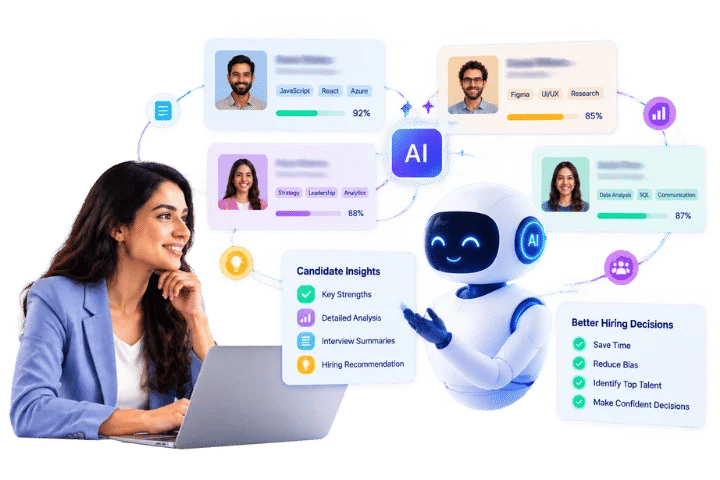



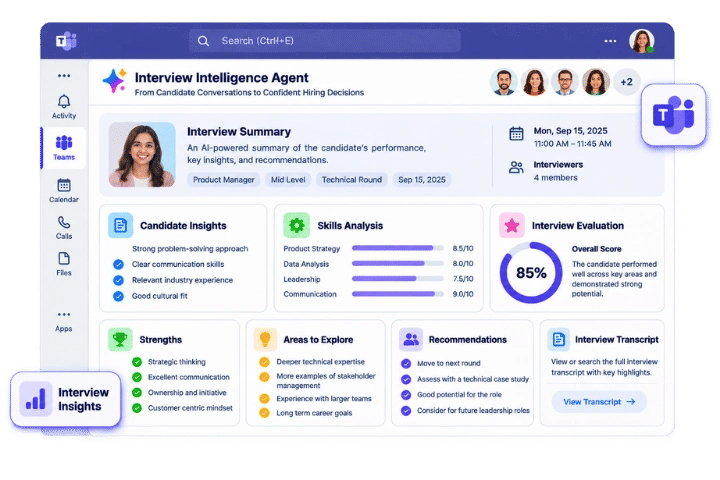




Turn candidate conversations into organized hiring evidence. Capture key responses, assess job-related skills, and give your team a clearer view of each applicant without relying on scattered notes.
Capture important interview moments
Review candidate abilities with context
Keep hiring feedback in one place
Help interview panels reach informed decisions
AI-generated conversation recaps
Candidate response and competency review
Interview question coverage tracking
Applicant strengths and development areas
Hiring panel feedback organization
Role-related evidence highlighting
Get a structured account of what each candidate discussed, including experience, examples and important answers.
Connect interview responses to the abilities and experience your open role requires.
Bring observations from multiple interview stages into one consistent candidate profile.
Compare relevant experience and stated capabilities against the position’s expectations.
Spot topics that received strong attention and areas that still need questions.
Prepare focused follow-up prompts based on gaps or themes from earlier conversations.
Turn candidate conversations into AI-powered insights, clear evaluations, and better hiring decisions.
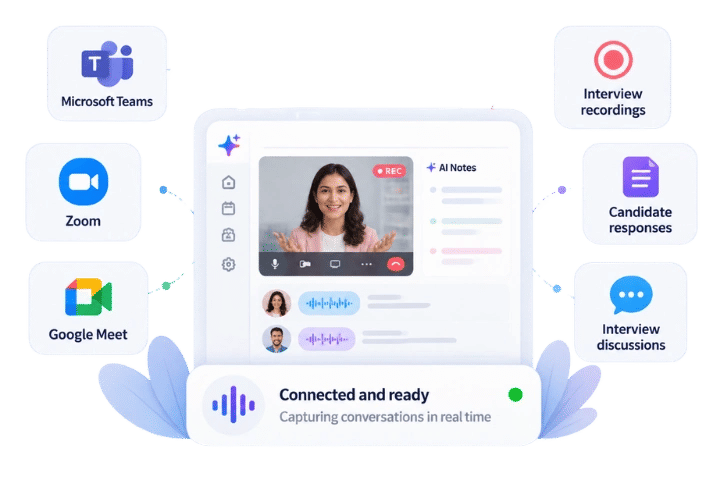
Collect candidate conversations from your preferred meeting platforms.
Microsoft Teams
Zoom
Google Meet
Interview Recordings
Candidate Responses
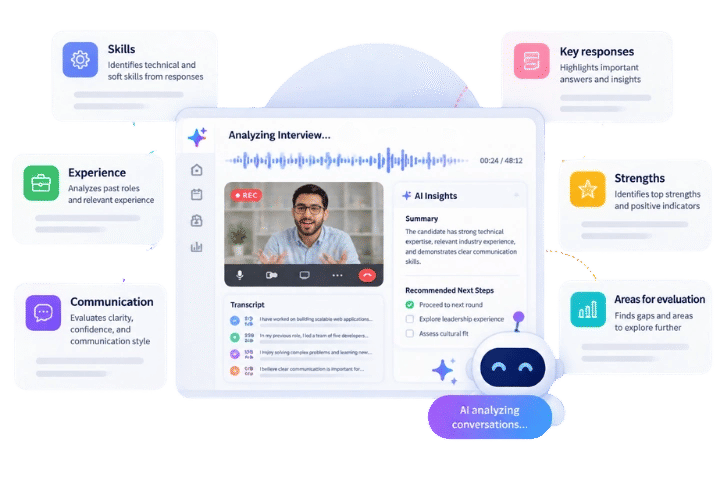
Use AI to identify important information from every candidate interaction.
Speech Transcription
Key Discussion Points
Skills Identification
Experience Highlights
Response Analysis
Conversation Summaries
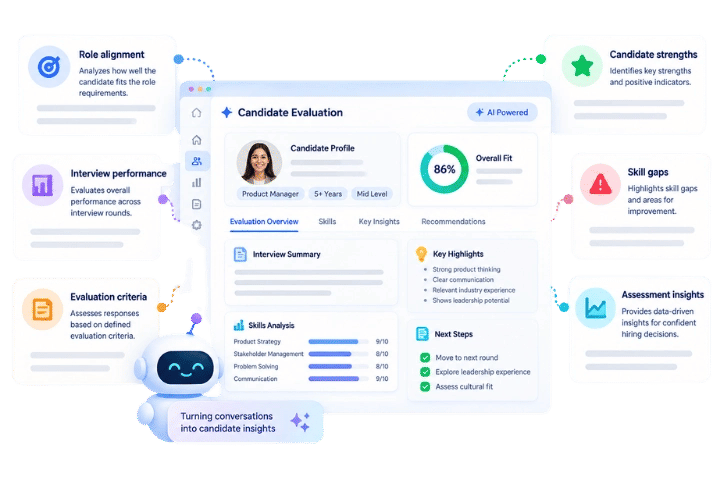
Review AI-generated insights to understand candidate strengths and job suitability.
Skills Assessment
Candidate Strengths
Knowledge Evaluation
Role Compatibility
Interview Performance
Evaluation Reports
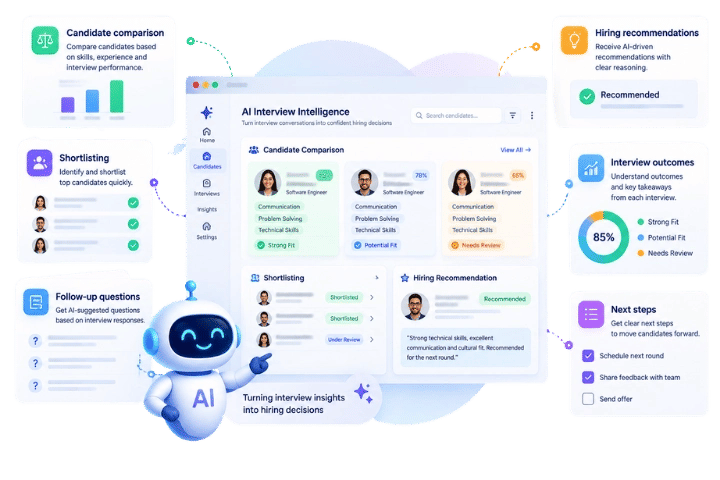
Use structured candidate insights to support confident recruitment decisions.
Candidate Comparisons
Hiring Recommendations
Interview Feedback
Talent Shortlisting
Decision Support
Keep important answers available for later discussion.
Connect examples from the conversation to job expectations.

Review applicants using consistent, role-specific criteria.

Identify topics that need deeper exploration in the next round.
Bring interview information into your evaluation process from familiar meeting environments.

Ecosystem compatibility (only where technically supported) Prepare candidate handoffs with concise, evidence-based interview records.
Review job-related examples before deciding who advances.
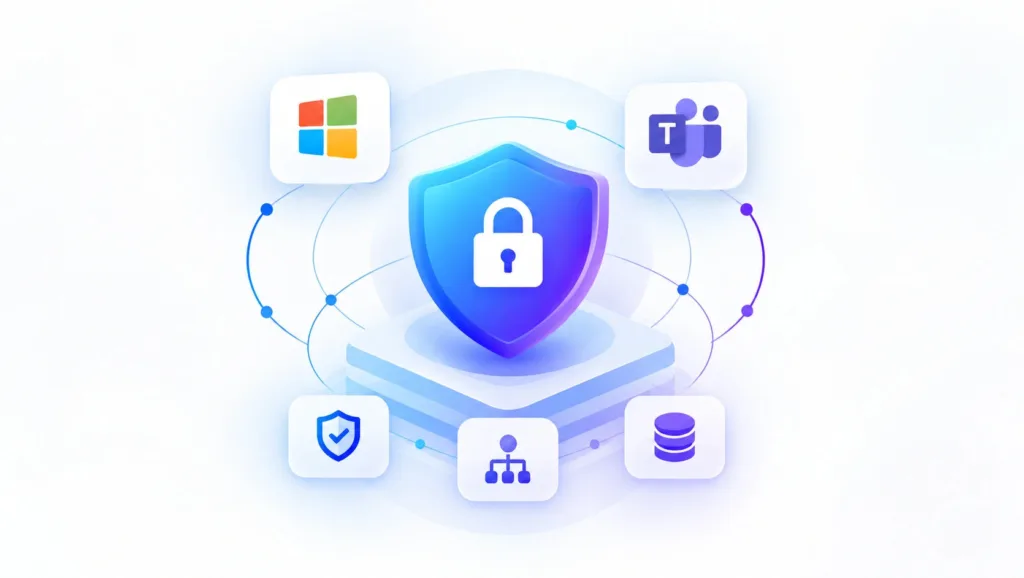
Enterprise grade protection for your meeting data.
Maintain a more consistent evaluation process across departments.
Your data stays secure with trusted access and handling protocols.
Revisit structured conversation records instead of piecing together individual recollections.

Center panel conversations on examples and requirements rather than impressions alone.
Carry forward unanswered questions and relevant context between stages.
Return to the original discussion when an AI-generated observation needs checking.
See every interaction, open issue and activity on one timeline before you walk into a call.

Watch how priorities, engagement and sentiment shift over time and shape the renewal outcome.
View each product separately to understand adoption, engagement, and customer value more clearly.
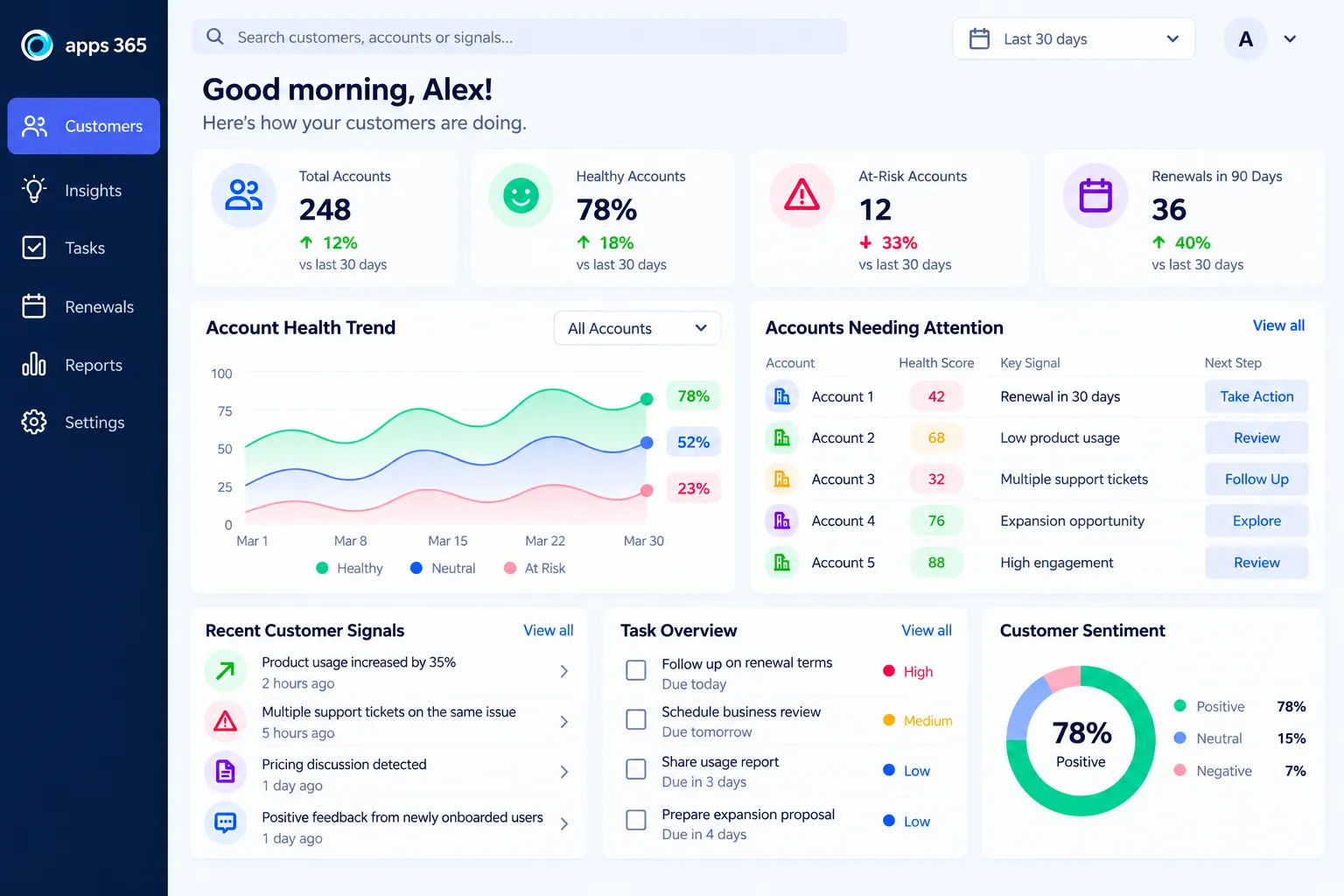
Compare product feedback side by side to understand how adoption and engagement affect customer value.

Walk into renewals knowing the customer's journey, priorities and growth opportunities.

It is a tool that helps organize interview conversations into useful recaps, candidate observations and follow-up topics for human reviewers.
It creates a more consistent record of the discussion, while recruiters and hiring managers remain responsible for evaluating the evidence.
Depending on configuration, it may identify experience examples, skills discussed, important answers, unanswered questions and next-step suggestions.
When supported, records from separate rounds can be considered together to give reviewers more context.
No. Hiring decisions should remain with qualified people who evaluate job-related evidence and apply appropriate safeguards.
Teams can use consistent, role-related criteria to organize findings. They should avoid relying on automated rankings without human review.
It can highlight subjects that were not covered fully and suggest questions tied to the role.
Potential options include Microsoft Teams, Zoom and Google Meet; confirm current support before publishing.
Inform candidates where required, obtain appropriate consent, restrict access and apply a clear retention policy.
They should be able to compare generated observations with the underlying interview record and correct inaccuracies.
It can help document job-related evidence consistently, but teams must test for bias and keep meaningful human oversight.
Recruiters, hiring managers, interview panels and HR operations teams that conduct recurring candidate interviews.
See how our solution can help your team
save time and cut costs.


By proceeding, you accept Cubic Logics Terms and Conditions and Privacy Policy